
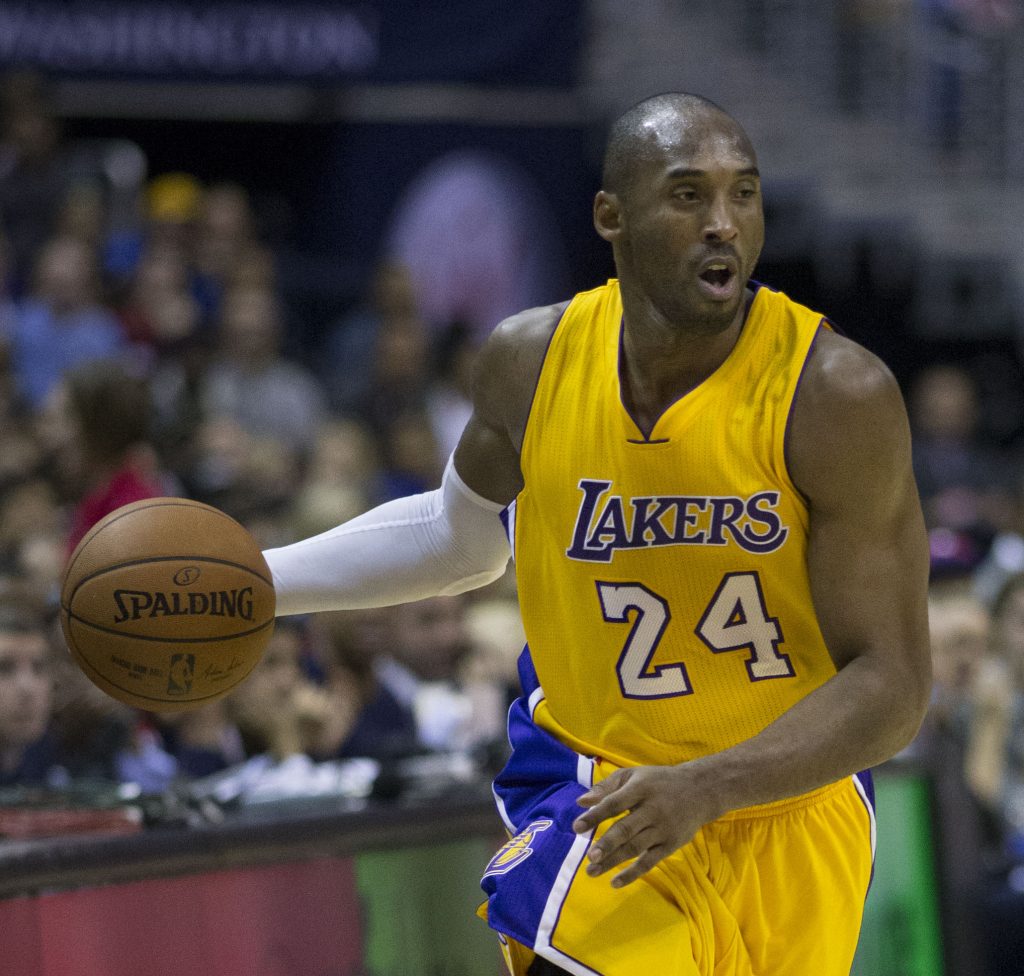
Kobe Bryant won 5 NBA championships.
He couldn’t enjoy a single one in the moment.
The second the final buzzer sounded, he was already thinking about next season. His teammates were celebrating. His family was crying. And Kobe? He was mentally preparing for training camp.
He had everything — and experienced nothing.
That’s the gratitude paradox.
The same drive that makes you successful makes gratitude feel like settling. You think: If I stop and appreciate what I have, I’ll lose my edge. I’ll get comfortable. I’ll stop being hungry.
So you keep chasing. Another promotion. Another milestone. Another achievement that’ll finally make you feel something.
But it never does.
Because you’re not experiencing any of it, you’re just checking boxes on the way to the next box.
Here’s what Kobe learned late in his career—and what took me a layoff to figure out:
Gratitude isn’t about being done. It’s about being present in your pursuit.
You can be grateful for where you are AND still be hungry for more.
That’s not a paradox. That’s sustainable ambition.
Why Your Ambition Is Eating You Alive
Kobe’s ambition was eating him alive.
He won his first championship in 2000. Then 2001. Then in 2002. Five total by 2010.
Each one felt… empty.
Not because he didn’t care. Because he cared too much. The moment one season ended, he was already obsessing over the next. Injuries piled up. Relationships suffered. The Mamba Mentality that made him great was destroying him.
In his 2015 documentary, Muse, Kobe reflected on feeling broken amid career frustrations and injuries.
He had everything a competitor could want. And he was miserable.
Sound familiar?
This isn’t new.
2,000 years ago, Marcus Aurelius faced the same problem — just with higher stakes.
Marcus Aurelius was the most powerful man in the world. Roman Emperor. Absolute authority over millions of lives.
He didn’t want the job.
He wanted to be a philosopher. Instead, he got plague, war, betrayal, and a disaster of a son who’d eventually ruin Rome.
Every morning, he woke up and wrote in his journal. Not for Instagram. Not for his legacy. For survival.
In Meditations he wrote, “When you arise in the morning, think of what a precious privilege it is to be alive—to breathe, to think, to enjoy, to love.”
Not because life was good.
Because gratitude was the only thing that kept him sane when everything was on fire.
For Marcus, gratitude wasn’t a soft skill. It was a strategic advantage.
It helped him separate signal from noise. See what actually mattered. Lead through crisis without drowning in chaos.
Fast forward 2,000 years, and we’re facing the same choice.
What Happens When You Achieve Everything and Feel Nothing
Here’s what happens when you keep running on pure hunger: You burn out before you achieve your legacy.
Worse — you win everything and feel nothing.
I learned this the hard way.
A few years ago, I was laid off during a corporate downsizing. On paper, I was fine. Solid resume. Strong network. I’d land somewhere.
But in reality? I was stuck. Projects stalled. Creativity limited. Growth opportunities were scarce.
The layoff devastated me. Then it relieved me. Then it made me grateful.
That progression taught me a lot about myself and about life.
I thought I’d lost something. Turned out, I’d been freed from something — a role that wasn’t serving me, a trajectory that wasn’t mine, a version of success I’d borrowed from someone else’s playbook.
The layoff forced me to ask: What do I actually want?
Not what looks good. Not what’s safe. Not what I’m supposed to want.
What do I want?
Authenticity. Growth. Empathy. Transparency.
I stopped waiting for permission and reinvented myself.
But here’s the thing:
I couldn’t do that while I was still chasing the next promotion, the next title, the next milestone that would finally make me feel secure.
I had to see what I already had before I could pursue what I actually wanted.
The Science: How Gratitude Increases Performance by 50%
In 2010, researchers Adam Grant and Francesca Gino ran an experiment at the University of Pennsylvania (Wharton School).
The question: Does gratitude actually change behavior?
The setup: 41 fundraisers making calls to bring in donations. All doing the same work. All getting the same pay.
Then the director of annual giving visited half the team.
What he said to the team couldn’t be more simple:
“I am very grateful for your hard work. We sincerely appreciate your contributions to the university.”
That’s it. Twenty seconds. No bonuses. No promotions. Just thanks.
The other half of the team? They got nothing. Just kept working as usual.
What happened next?
The fundraisers who heard “thank you” made 50% more calls that week.
Not 5%. Not 10%.
Fifty percent.
The control group averaged 41 calls per week. The thanked group? 63 calls.
Same people. Same job. Same pay.
The only difference? Someone said they mattered.
Grant and Gino discovered that it wasn’t about feeling more competent. It was about feeling socially valued.
When you’re thanked, you don’t just feel good — you feel seen. Like your work actually matters.
And that feeling? It changes everything.
The researchers ran follow-up experiments. Same pattern every time.
When people felt appreciated, they were twice as likely to help again. Not just the person who thanked them, but total strangers as well.
Because gratitude doesn’t just motivate you to reciprocate.
It changes how you see yourself.
You go from “I’m just doing my job” to “I’m someone whose contributions matter.”
So if gratitude works for Kobe, Marcus Aurelius, and university fundraisers, why does it still feel so hard?
Because you’re doing it wrong.
Most people think gratitude means:
- “I should be happy with what I have.”
- “I should stop wanting more.”
- “I should feel guilty for my ambition.”
No wonder it feels like settling.
The truth is, though, gratitude isn’t about being satisfied. It’s about being present.
It’s not: “I have enough, so I’ll stop pushing.”
It’s: “I see what I have, so I know where to push next.”
Kobe figured this out in his final season.
It became a “thank you tour.” He wasn’t done being competitive — he dropped 60 points in his final game.
But he was finally present.
He appreciated his teammates. His opponents. The process. The privilege of still being able to compete.
And that presence — that gratitude — didn’t make him soft.
It set him free.
Post-retirement, he built an Oscar-winning career. Became a present father. Left a legacy beyond basketball.
The mindset isn’t about seeking a result—it’s more about the process of getting to that result. It’s about the journey and the approach. It’s a way of life. I do think that it’s important, in all endeavors, to have that mentality.
—Kobe Bryant, The Mamba Mentality: How I Play
That’s the shift.
Gratitude in motion.
The 5-Minute System: Gratitude in Motion
You don’t have to choose between ambition and gratitude. You just have to practice gratitude differently.
I’m not asking you to journal about rainbows and butterflies. I’m asking you to build a system that helps you see clearly, decide faster, and stay energized.
Gratitude isn’t about feeling warm and fuzzy. It’s about strategic clarity.
Here’s the framework:
Three practices. Five minutes total. One transforms how you pursue your ambition.
Step 1: The 60-Second Morning Anchor
Marcus Aurelius did this 2,000 years ago.
Every morning, before dealing with war, plague, and betrayal, he wrote down what he was grateful for.
Not because life was good. Rather, because gratitude gave him clarity when everything was chaos.
You don’t need a journal. You need 60 seconds.
Before you open your email, Slack, or calendar, name three things you already have that matter.
Resources. Relationships. Opportunities. Health. Skills.
This isn’t touchy-feely. It’s strategic.
When you start from abundance, you make better decisions. You stop chasing noise. You invest in signal.
Ryan Holiday — one of my favorite authors — and the author of The Daily Stoic — journals every morning. I’m not saying that you need to journal (I’ll write about that at a later date) but you should take the time to recognize the positives that you have going for you.
Do this in 60 seconds: Tomorrow morning, before touching your phone, take 60 seconds. Name three resources you already have (skills, relationships, tools, health).
Then ask: “How can I leverage what I have today?”
Step 2: The 2-Minute Evening Audit
Grant and Gino’s study showed that when people feel valued, they do more of what works.
Every evening, write down three things that worked today.
Not three things you’re “thankful for.” Three things that WORKED.
A conversation that moved a project forward. A decision that saved time. A moment when you were fully present.
This practice does two things:
- Helps you see patterns (what consistently works)
- Gives you proof you’re making progress (even on hard days)
Kobe did this in his final season. Called it “gratitude film study” — reviewing what worked so he could replicate it.
Do this in 2 minutes: Tonight, before bed, open your Notes app (or notebook). Write “3 things that worked today.” Be specific: “Blocked calendar for deep work,” not “I was productive.”
Step 3: The Monday Reset (2 Minutes)
Most people start Monday in deficit mode.
What’s broken. What’s behind. What’s missing.
That mindset drains your week before it starts.
Instead, start from abundance.
Every Monday morning, before your first meeting, spend 2 minutes on:
- What progress did I make last week? (Even small wins)
- This one is even more powerful if you do a Friday dump, so you know what progress you made the week before.
- What resources do I have this week? (Time, tools, people)
- What’s one thing I’m grateful I GET to pursue? (Not have to — GET to)
This isn’t about lowering standards. It’s about fueling ambition sustainably.
I do this every Monday. It changed everything about my week. (And the Mondays that I don’t get to do it, I can feel the difference negatively.)
Instead of drowning in my task list, I see what I actually have to work with. Instead of chasing everything, I aim to focus on what matters.
Same ambition. Different energy.
Do this in 2 minutes: Next Monday, before opening email, set a 2-minute timer. Answer those three questions. Notice how it changes your decisions for the week.
The Choice
That’s it.
Three practices. Around five minutes total.
You don’t need a journal (though it would be good if you had one.) You don’t need to “feel grateful.”
You just need to see clearly.
Kobe spent most of his career chasing the next championship. By the time he learned to be present, his body was breaking down.
But he figured it out. His final season wasn’t about proving anything. It was about experiencing everything.
60 points in his final game. A thank-you tour that honored 20 years of pursuit. A legacy that went beyond basketball.
He got there. But it took him almost losing himself to find it.
You don’t have to wait that long.
When you practice gratitude in motion, you’re not choosing between ambition and presence.
You’re fueling one with the other.
Start tomorrow morning. 60 seconds. Three things you already have.
See what happens when you stop chasing long enough to see what’s already working.
Don’t wait for a layoff, an injury, or a crisis to teach you what Kobe learned.
Start now.
Ambitious people often view gratitude as settling or complacency. They fear that appreciating what they have will kill their drive. Research shows this is a false choice—gratitude actually fuels sustainable ambition by helping you see what’s working so you know where to push next.
A: Practice “gratitude in motion”—three daily habits that take 5 minutes total: (1) Morning Anchor: Name 3 resources you have before checking email, (2) Evening Audit: Track 3 things that worked today, (3) Weekly Reset: Start Mondays from abundance, not deficit. This system, used by high performers from Kobe Bryant to Marcus Aurelius, builds clarity without killing ambition.
The gratitude paradox is the belief that you must choose between ambition and gratitude. Ambitious professionals think appreciating what they have means they’ll stop being hungry for more. Research by Adam Grant shows the opposite: gratitude increases performance by 50% because it helps you see clearly and invest energy strategically.
Gratitude isn’t about being satisfied with where you are — it’s about being present in your pursuit. Research shows that when people practice strategic gratitude (tracking what’s working, not just what they’re thankful for), they increase their effort by 25% and work 13% more effectively. The key is implementing three simple practices that take 5 minutes total: a morning anchor to see what you have, an evening audit to track what worked, and a weekly reset to start from abundance instead of deficit.