

In 1902, the French administration in Hanoi finished a modern sewer system, and the rats moved in.
So the city offered a bounty. One cent per rat.
Unsurprisingly, collecting dead rats turned out to be unpleasant work for everyone involved, so the administration simplified. Bring us the tail. We’ll take your word for the rest.
The tails came in. Hundreds, then thousands, then more than twenty thousand in a single day.
And the rat population went up.
Inspectors started finding rats in the sewers with no tails. Hunters were catching them, cutting the tails off, and letting them go, because a rat that keeps breeding is worth another cent in a month. Others skipped the sewers and farmed rats in their yards (entrepreneurship at its best).
The historian Michael Vann wrote a book about this called The Great Hanoi Rat Hunt. In reading it (it’s illustrated btw), the thing that stands out is that there was no cheating. The city asked for tails, and paid for tails, and got tails, in numbers that would have looked like a huge success.
It just never asked for the thing it actually wanted.

Sixty years later in Vietnam, General William Westmoreland had the same problem and settled on the body count. A 1977 survey of 173 American generals found 61% believed the numbers were grossly exaggerated.
In 1975, an economist at the Bank of England named Charles Goodhart found that any observed statistical regularity tends to collapse once pressure is placed on it for control purposes. Essentially, a measure stops being a good measure once it becomes a target. The measure doesn’t just stop working. It replaces the goal. And then people work very hard, all in good faith, of course, at the wrong thing.
Why the em dash became evidence
There’s a lot of argument right now about whether you can tell AI writing.
People are spending more time trying to un-AI their work than they spend writing and publishing it. What was meant to be an efficiency game has turned into a bout of editing unlike anything we’ve seen before.
This article started for me as a chicken-and-egg question, which I know has an obvious answer. Human writing came first. But our writing trains the machine, the machine writes, and that writing trains the next one. I’ve been calling it the AI writing death loop.
Chicken and egg turned out to be the wrong frame. Knowing what came first tells you nothing about where it ends up.
What are we creating? Where is the art going? What does good look like? And if we lose the ability to tell what good looks like, how do we justify our taste at all?
For most of the time since we started writing, no one has had to prove that a paragraph was written by an actual person. After all, paragraphs didn’t write themselves. A quite simple verification system, and it held true for about five thousand years. That changed in 2023. Since then we’ve been slowly building a replacement the way the administration in Hanoi built one. Not by measuring the thing we care about, like good thinking and stories, which is hard, but by searching for something a bit easier to count or to spot.
So, inevitably, we landed on the em dash. It’s not the only tell, but it’s probably the most talked about.
It’s a reasonable-looking signal. Large language models (LLMs) do use em dashes more than most human writers, for boring reasons involving training data. So the mark became evidence. Then it became a rule. Then it became something people edit around.
And once you’ve been told a mark is a tell, you start seeing it everywhere, and every time you see it, it confirms the rule. But it’s not quite that simple. For example, that so-called rule travels badly. In German, the em dash barely exists, so a German reader flagging one is either detecting English or deciding it’s obviously AI.
In April 2026, a writing platform called Ellipsus surveyed 5,202 writers and editors. Nearly half said they worry their work could be mistaken for AI. What they reported doing about it is the interesting part: simpler vocabulary, fewer em dashes, and in some cases deliberately inserting errors into their own work to look, in the survey’s phrasing, just human enough.
People are damaging their own writing to pass a test that theoretically doesn’t exist.
In November 2025, OpenAI shipped an update that made ChatGPT much better at obeying an instruction to stop using em dashes. Sam Altman called it a small-but-happy win. Enough people asked the machine to hide the tell that hiding it became a product improvement. The writing didn’t get better. The camouflage did.
Conventions like this don’t stay informal for long. They end up in style guides, school policies, and editorial standards, and those get revised about once a decade.
Everyone is producing tails. Nobody is killing rats.
Hell, I’ve done it myself. A friend messaged me a few months ago about a LinkedIn post I’d written. He said, “Hey, this is AI; you have an em dash.” He was being kind in warning me. But I had added the em dash myself.
What I noticed afterward was that I stopped using em dashes. Even though I’ve used them my whole writing life. Here I was changing because I didn’t want to get called out, rightly or wrongly.
The instinct behind my friend’s message is a good one, and I share it. We want to know that what we read was made by someone, that there was thought in it and probably a bad first draft at 11 pm (along with some blood, sweat and tears, of course). That’s a reasonable thing to want.
The problem isn’t the wanting. It’s what we’ve agreed to accept as proof.
The part I don’t want to talk past
Don’t get me wrong. I’m a proponent of using AI for writing. I use it as a thought partner, for drafting, sometimes for editing. But I’m cognizant of how I want my writing to sound at the end of the day, and there are very few days when the output feels like something that’s my own.
It’s not all doom and gloom, though. There are real positives to be gained. AI helps people who never grew up writing express ideas they’d otherwise have kept to themselves. It helps people whose first language isn’t English. Think about how many good books you’ve never read because they were written in German, French, Spanish or Russian and nobody ever translated them. That’s a lot of thinking that never had an outlet.
Translate, brainstorm, draft, argue with it, cut things down. All fine. What worries me is when we no longer exercise the faculty that decides what good is.
So keep the tools. The question is what they’re doing to us while we use them.
Taste collapse: what it is and why it’s different from model collapse
Because the danger isn’t that AI learns to write like us. It already does. It’s that we learn what good writing looks like from AI.
Taste isn’t a possession. It’s a residue of your eyes moving between sentences of varying length and rhythm, until you work out what you like and what brings you joy. Editors get taste from reading. Designers get it from looking. Nobody is born with a standard. We’re shaped by the people and the things closest to us.
Which takes exposure, and the exposure is thinning. I saw a post recently from a YouTuber with millions of followers saying he doesn’t read books. He’s more of an “article guy.”
If what you read increasingly consists of language already shaped by algorithms, optimization, and generative systems, where does the independent standard come from?
As a marketer, I’ve watched a standard get rewritten once already. For most of my career the shape of an article on the web was decided by search. Notice it or not, SEO (search engine optimization) has shaped how many articles are structured and how they sound for more than a decade. Did we even realize this? Those rules climbed out of the checklist and into our judgment, which is where rules go when they win.
So it’s worth asking what’s nearby now.
Researchers at USC found that model output shows less variation than human writing. Zhivar Sourati, one of the authors, says the risk is “not just that LLMs shape how people write or speak, but that they subtly redefine what counts as credible speech, correct perspective, or even good reasoning.”
It’s mildly amusing if you think about it. We designated judgment as the supervisor, then handed the supervisor’s education to the thing it was supposed to be supervising.
On the technical side, there’s a term for a related failure. In 2024, a team led by Ilia Shumailov published a paper in Nature on what they call model collapse. It turns out that if you train generative systems on their own output for enough generations, the distribution narrows. The rare patterns go first. The average becomes more average, and then the model forgets anything else was ever there.
What we’re facing is very similar, and I’d call it taste collapse. It’s the AI writing death loop I mentioned earlier, in cultural form. The machine learns from us, writes for us, and we learn what good sounds like partly from the machine. So we adjust, because that’s what we humans do. Then we adapt again, based on the adjusted versions we made. And slowly our average just becomes more average.
Model collapse is about what the machines produce. Goodhart is about what we feed them. Taste collapse would be about whether anyone left can tell the difference.
We’ve been worried about machines passing as human writers. The likelier problem is human writers becoming indistinguishable from one another.
A broken metric eventually gets replaced, because the number stops matching what you can see out the window. Eventually somebody asks why there aren’t fewer rats. That’s the whole trouble with taste. It feels like yours. And nobody else can measure it, so nobody can tell you it’s drifted.
What are we writing for?
So if AI can imitate our style, do we answer by abandoning the style, or by becoming more ourselves?
Henri Matisse has a line I enjoy. “An artist must never be a prisoner of himself, prisoner of a style, prisoner of a reputation, prisoner of success.”
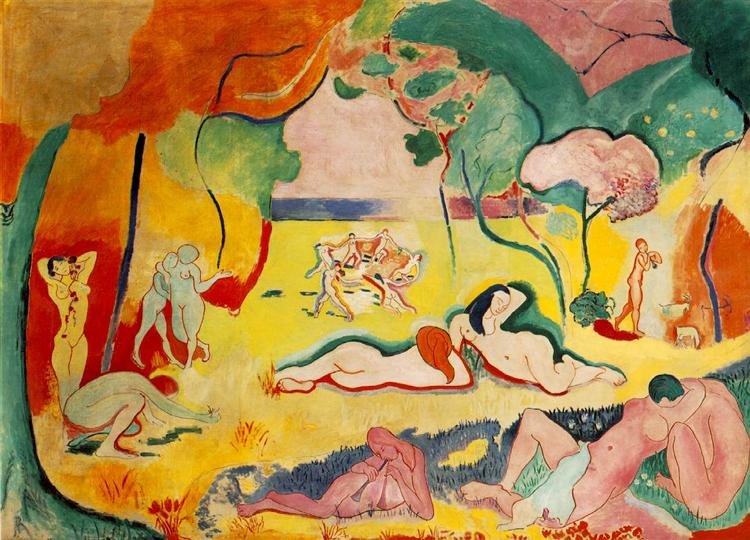
Every prison he names is one the artist builds themselves.
There’s still no law against the em dash. No committee, no enforcement. (Though I’m somehow sure the EU will find a law for that.) And it makes sense that we’d police ourselves anyway. We write to build trust. If we start to feel less trustworthy, of course we begin worrying that people won’t accept what we make.
Epictetus said that in trying to please other people, we end up pointed at things outside our control, and lose hold of what we were doing in the first place.
Maybe the question isn’t whether AI belongs in the writing. That argument is already getting boring. The more interesting question is what the writing belongs to. Are the tools serving the work, or is the work rearranging itself to serve the tools? Am I choosing this sentence because it says what I mean, or because I’ve learned what a machine thinks a human sentence looks like?
I don’t have a good answer to these questions. Yet. No one does. But for now I’ll still run the anti-AI pass on everything before it’s published, which tells you how embedded that game we’re playing is. What I’m trying to do now is notice the difference between improving the writing and improving its chances of being believed.
And I’ve started allowing myself one or two em dashes again — where the mark is doing something a comma can’t — because that’s a judgment, and the judgment is the part worth keeping. And, well, we should all enjoy flipping the proverbial bird to some AI overlord judging our writing.
The rats in Hanoi didn’t get away because the officials were stupid. They got away because a tail was easy to count and a rat was not.
FAQs
aste collapse is the cultural counterpart to model collapse in machine learning. Model collapse describes what happens when generative systems are trained repeatedly on their own output: the distribution narrows and rare patterns disappear first. Taste collapse describes the same narrowing happening to human judgment. If people increasingly learn what “good writing” looks like from AI output, and then produce writing shaped by that standard, each generation of both human and machine writing inherits an already-normalized copy.
Not reliably. Language models do use em dashes at higher rates than most human writers, but the mark has been a normal part of English prose for centuries, and the correlation weakens as soon as it becomes a known rule. In November 2025 OpenAI shipped an update making ChatGPT much better at following instructions not to use em dashes, which means the signal is now being suppressed on both sides. The em dash is a proxy, and proxies degrade once people optimize against them.
In 1975 the economist Charles Goodhart observed that any statistical regularity tends to collapse once pressure is placed on it for control purposes. Applied to AI detection: once a feature like the em dash is treated as evidence of machine authorship, writers begin removing it, and the feature stops indicating anything about authorship. The measure doesn’t just stop working, it replaces the goal, so people optimize for looking human instead of writing well.
es, and it’s measured. In April 2026 the writing platform Ellipsus surveyed 5,202 writers and editors. Nearly half said they worry their work could be mistaken for AI. Respondents reported using simpler vocabulary, cutting em dashes, and in some cases deliberately inserting errors into their own work to look, in the survey’s phrasing, “just human enough.”
Not directly. The tools raise the floor for people who never trained as writers and for people writing in a second language. The risk is second-order: model output is measurably less varied than human writing, and if human judgment about quality is increasingly formed by exposure to that output, the standard itself narrows. The danger isn’t the machine writing badly. It’s people learning what good looks like from a narrower source.